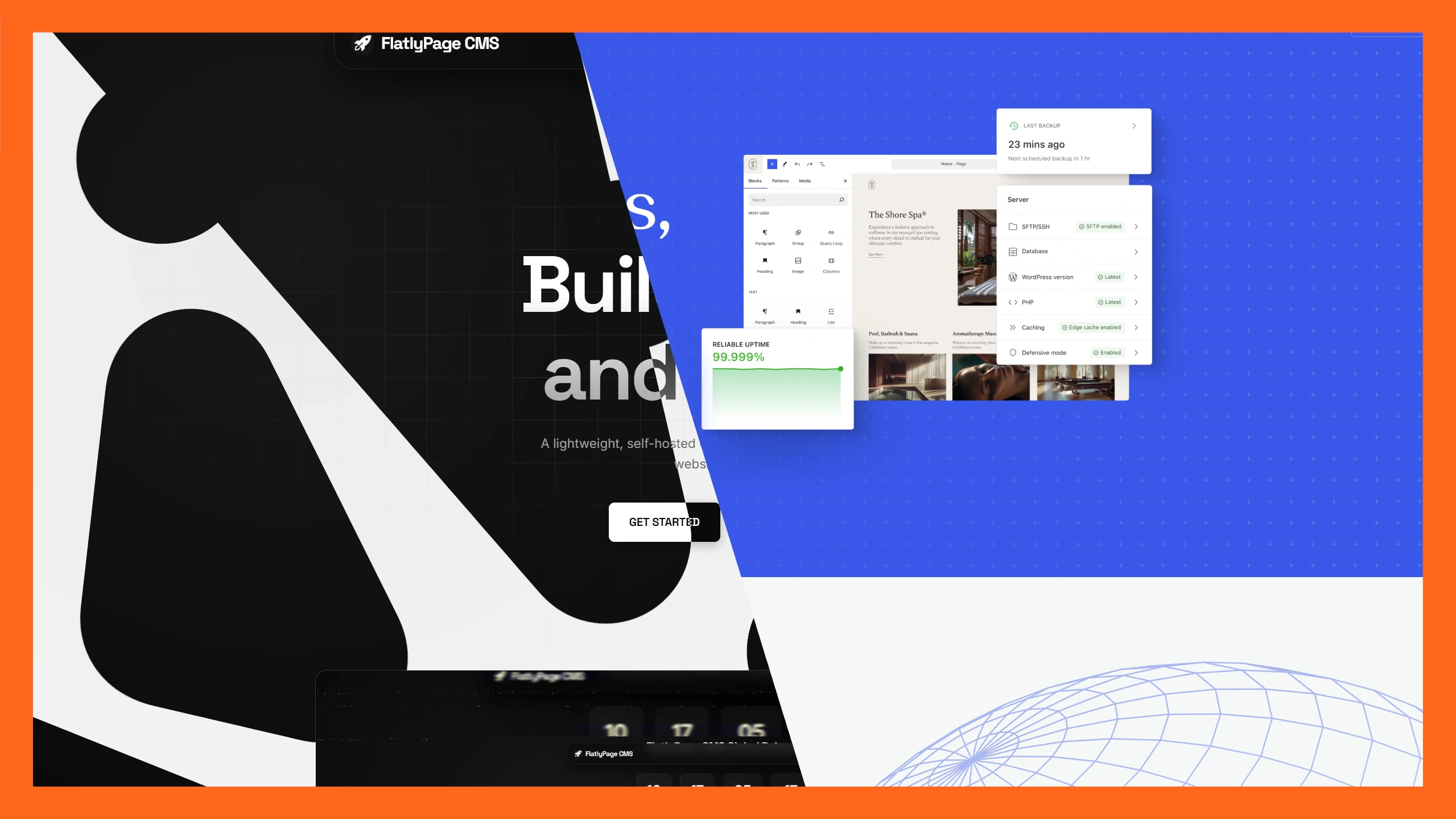
FlatlyPage CMS is a lightweight, self-hosted content management system that allows you to build websites quickly, easily, and without any coding. Creating a website is as simple as selecting a block, adding it, and editing it, while the intuitive block editor makes moving and modifying page elements effortless. At the core of FlatlyPage CMS is the Renderion Engine – a modern rendering engine that converts predefined blocks into responsive HTML components, rendering only what is needed. This ensures clean, predictable, and highly efficient code. The system includes built-in multimedia support for video, audio, and image galleries using native browser technologies, while inline SVG eliminates the need for external icon libraries. Renderion’s architecture also allows developers to easily add custom blocks, keeping the system lightweight and stable. FlatlyPage CMS delivers outstanding performance, scoring 99/100 on desktop and 91/100 on mobile, with extremely fast content rendering, minimal layout shifts, and zero blocking time – proving that speed, stability, and web standards can work seamlessly together.
WordPress is the world’s most popular CMS, offering a vast ecosystem of plugins and themes and significant flexibility in designing and customizing websites. However, PageSpeed Insights shows that WordPress performance can be a challenge, especially on mobile devices: its performance score is 59/100, with slight delays in First Contentful Paint (FCP), high Total Blocking Time (TBT), and noticeable Cumulative Layout Shift (CLS). Desktop scores are better at 94/100, but there are still delays and higher resource usage compared to FlatlyPage CMS. In practice, this means WordPress often requires additional optimization, hosting resources, and maintenance, and frequent plugin or theme updates can introduce conflicts and slowdowns.
In summary, FlatlyPage CMS is perfect for users seeking a fast, simple, and stable system to create professional websites without coding, offering instant loading, predictable code, and minimal layout shifts. WordPress is better suited for larger projects that require full control over features and access to a wide plugin ecosystem, but at the cost of increased maintenance and optimization effort. FlatlyPage combines simplicity, speed, and flexibility through its block-based structure and Renderion Engine, offering a modern, lightweight alternative to traditional CMS platforms, while WordPress remains a powerful but more demanding tool.